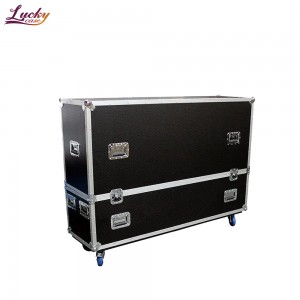
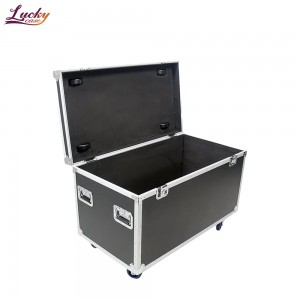
Custom Case


Flight Case Corner Bracket Metal L-Bracket Angle Bracket Flight Case Hardware
♠ Product Description
Durability and Strength
Crafted from high-quality metal, the Flight Case Corner Bracket L-Bracket offers exceptional strength and durability. This essential flight case hardware reinforces the corners of your cases, ensuring reliable protection during transportation. It is built to withstand the harshest conditions, making it ideal for both professional and personal use, whether for music equipment or fragile items.
Versatility for Custom Cases
Designed for versatility, this L-bracket is perfect for custom-made flight cases. It allows you to create secure, long-lasting cases that can handle all kinds of gear. As a key component of flight case hardware, it’s favored by both amateur builders and professionals alike. Many flight case hardware suppliers offer this bracket as a crucial part of their accessory kits.
Easy Installation and Use
The Flight Case Corner Bracket L-Bracket is simple to install, with pre-drilled holes for easy mounting. It ensures a secure fit in any custom case build, providing strong corner support. Ideal for those looking to enhance their cases, it is available through trusted flight case hardware suppliers, who guarantee quality and reliable performance for your projects.
♠ Production Process
1.Cutting Board
Cut the aluminum alloy sheet into the required size and shape. This requires the use of high-precision cutting equipment to ensure that the cut sheet is accurate in size and consistent in shape.
2.Cutting Aluminum
In this step, aluminum profiles (such as parts for connection and support) are cut into appropriate lengths and shapes. This also requires high-precision cutting equipment to ensure the accuracy of the size.
3.Punching
The cut aluminum alloy sheet is punched into various parts of the aluminum case, such as the case body, cover plate, tray, etc. through punching machinery. This step requires strict operation control to ensure that the shape and size of the parts meet the requirements.
4.Assembly
In this step, the punched parts are assembled to form the preliminary structure of the aluminum case. This may require the use of welding, bolts, nuts and other connection methods for fixing.
5.Rivet
Riveting is a common connection method in the assembly process of aluminum cases. The parts are firmly connected together by rivets to ensure the strength and stability of the aluminum case.
6.Cut Out Model
Additional cutting or trimming is performed on the assembled aluminum case to meet specific design or functional requirements.
7.Glue
Use adhesive to firmly bond specific parts or components together. This usually involves the reinforcement of the internal structure of the aluminum case and the filling of gaps. For example, it may be necessary to glue the lining of EVA foam or other soft materials to the inner wall of the aluminum case through adhesive to improve the sound insulation, shock absorption and protection performance of the case. This step requires precise operation to ensure that the bonded parts are firm and the appearance is neat.
8.Lining Process
After the bonding step is completed, the lining treatment stage is entered. The main task of this step is to handle and sort out the lining material that has been pasted to the inside of the aluminum case. Remove excess adhesive, smooth the surface of the lining, check for problems such as bubbles or wrinkles, and ensure that the lining fits tightly with the inside of the aluminum case. After the lining treatment is completed, the interior of the aluminum case will present a neat, beautiful and fully functional appearance.
9.QC
Quality control inspections are required at multiple stages in the production process. This includes appearance inspection, size inspection, sealing performance test, etc. The purpose of QC is to ensure that each production step meets the design requirements and quality standards.
10.Package
After the aluminum case is manufactured, it needs to be properly packaged to protect the product from damage. Packaging materials include foam, cartons, etc.
11.Shipment
The last step is to transport the aluminum case to the customer or end user. This involves arrangements in logistics, transportation, and delivery.

The production process of flight case can refer to the above pictures.
For more details about flight case or flight case hardware, please contact us!